the long shift · read before the zones
The Monitoring Desk: One Signal at a Time
An operator who watches a building through the night does not stare harder than anyone else. She has simply decided, in advance, where to look and what counts.
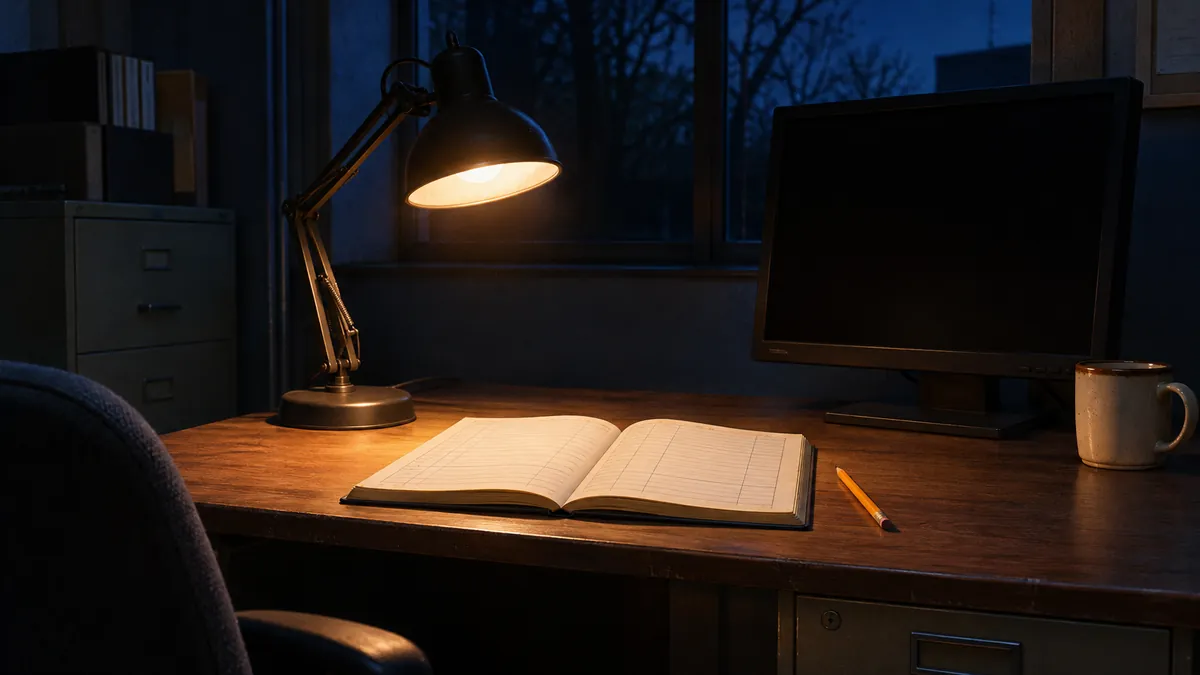
The shift begins with a walk through the zones, not with the screens. In our trade a monitored house is never "the whole house". It is a short list of places where something worth knowing tends to happen: an entry door, a corridor, a window over the back garden. Each place gets one sensor and one rule for what that sensor is supposed to notice. Everything else in the building is allowed to be quiet. The operator does not feel guilty about the rooms without a sensor; the design decided, hours ago, that those rooms were not where the signal would come from.
We start here because the opposite approach is how most of us run our own heads. We try to keep every errand, name, number and appointment floating in the air at the same moment, and then we are surprised when one of them drops. A desk with forty live cameras and no plan is not more alert than a desk with four. It is only noisier. Many people we have spoken with about this, most of them past fifty, describe that noise in the same words: a full day that somehow left no clear trace, and a feeling of being busy without being sharp.
So the first lesson from the desk is to choose your zones. Pick four places in the house where a reminder would actually change what happens next. For most households those four turn out to be the door you leave through, the corridor you cross at night, the counter where the day gets planned, and the table beside the bed. You do not need sensors, of course. A bowl, a lamp, a paper calendar and a small notebook do the same job, because the point is not technology. The point is that each place has one job, and you know what it is.
The second lesson is about the difference between a reminder and an alarm. An alarm is loud, sudden and meant to make you move before you think. A reminder is quiet and waits for you to arrive. Good monitoring uses alarms very rarely, because an operator who hears a siren every ten minutes stops hearing sirens at all. In the same way, a phone that buzzes for every small task teaches us to swipe the buzz away. A note on the inside of the front door that says "glasses, wallet, the letter for the post office" does not buzz. It is simply there at the moment your hand is on the handle, which is the only moment it matters.
The third lesson is one signal at a time. When two sensors trip together, a trained operator does not split her attention evenly between them. She takes the one with the clearer pattern, confirms it or clears it, writes one line in the logbook, and only then turns to the next. That small discipline is worth copying at home. If you walk into the kitchen to find the scissors and the kettle starts to whistle and the phone rings, finish one of the three before touching the second. It feels slow. In practice it is faster than returning to the kitchen twice, wondering why you came.
The fourth lesson is the logbook. Every shift at a desk ends with a handful of lines in plain language: what tripped, what it turned out to be, what was done. Nobody reads those lines the next morning for drama. They read them because a written record frees the next person from having to remember. You can keep the same kind of record for yourself, on paper, in a few words a day. "Called the pharmacy. Car in for the brake check Thursday. Ana's birthday is the 14th." The act of writing it is itself a small exercise in focus, and the page will hold what the mind does not need to carry overnight.
The fifth lesson is calibration. A new sensor always produces false alarms in its first week: a curtain moving in the heating draft, a spider on the lens. The operator does not throw the sensor away. She adjusts its sensitivity and its position until it reports what matters and ignores what does not. Home reminders need the same patience. The key bowl in the wrong place will be walked past for a week. The calendar hung too high will be ignored. Move it, lower it, try a different spot, and give it a fortnight before you decide it does not work for you.
The quiet hours teach the last lesson, which is rest. Night operators work in shifts precisely because attention is not an endless tank. They take short breaks away from the screens, they drink water, they stretch, and they hand over to a colleague before the edges of their judgment begin to soften. Readers often tell us that the thing that helps their focus most is not a trick at all but a regular bedtime, a short walk before work, and an evening without a screen glowing in their face at midnight. We cannot tell you what is right for your body. We can only say that no desk we have ever seen was run well by someone who had not slept.
Toward dawn the shift is quiet enough to look at the plan again. Which zones produced something useful tonight? Which never did? A good operator changes the plan when it stops matching the building. Your own zones should change too. When grandchildren come to stay, the front door needs a different list. When a new medicine is added by your doctor, the kitchen counter might need a small chart. The arrangement is yours, and it should follow your life, not the other way around.
At handover the operator walks the zones once more, reads her last lines aloud to the next person, and goes home. If there is one thing to take from the desk into an ordinary house, it is that calm attention is mostly decided in advance. You choose where to look, you let the rest be quiet, and you trust a page to remember for you. The four zone notes that follow are short, practical, and written for the moment your hand is already on the door.